
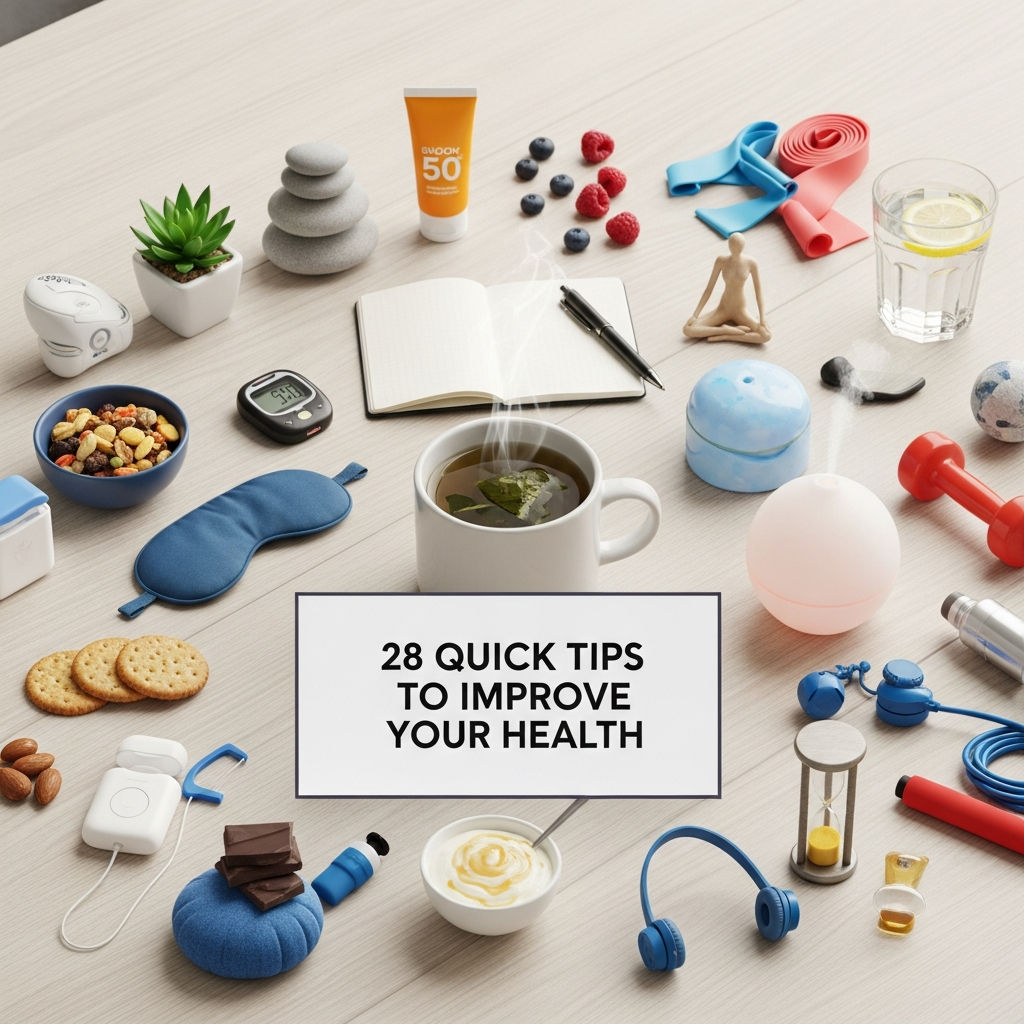
28 Quick Tips to Improve Your Health Starting Today
Improving your health often feels like a monumental task that requires a complete lifestyle overhaul. We tend to think that if we aren’t running marathons or eating a perfectly balanced organic diet, we aren’t making progress. However, the secret to long-term wellness lies in the “micro-habit.” Small, incremental changes are more sustainable and, over time, lead to significant transformations in your physical and mental well-being.
If you are looking to boost your energy, sharpen your mind, and protect your body against future illness, you don’t need a miracle cure. You need a series of actionable steps. Here are 28 quick tips to improve your health, categorized by the pillars of wellness: nutrition, movement, mental health, and daily habits.
Nutrition and Hydration: Fueling Your System
What you put into your body is the foundation of your health. You don’t have to follow a restrictive diet to see results. Instead, focus on adding nutrients and making smarter swaps.
- 1. Drink Water First Thing in the Morning: Your body wakes up dehydrated. Drinking a full glass of water upon waking kickstarts your metabolism and flushes out toxins.
- 2. Prioritize Fiber: Fiber is essential for gut health and blood sugar regulation. Incorporate beans, lentils, and raspberries into your meals.
- 3. Choose Whole Grains: Swap white bread and pasta for brown rice, quinoa, or oats. Whole grains provide sustained energy and keep you full longer.
- 4. Limit Liquid Calories: Sodas and sugary coffees add hundreds of calories without providing satiety. Stick to water, herbal tea, or black coffee.
- 5. Use Smaller Plates: This simple psychological trick prevents overeating by making smaller portions look more substantial.
- 6. Eat “The Rainbow”: Aim for at least three different colors of vegetables on your plate to ensure a wide spectrum of vitamins and antioxidants.
- 7. Practice Mindful Eating: Turn off the TV and put away your phone while eating. Focusing on your food helps you recognize fullness cues and prevents overindulgence.
Physical Activity: Moving for Longevity
You don’t need a gym membership to stay active. Physical health is about consistent movement throughout the day, not just a 30-minute workout once a week.
- 8. Take the Stairs: It’s a classic for a reason. Taking the stairs instead of the elevator is a quick way to get your heart rate up and strengthen your legs.
- 9. The 10-Minute Walk Rule: If you feel sluggish, commit to just 10 minutes of walking. Usually, once you start, you’ll want to keep going.
- 10. Stand Up Every Hour: Prolonged sitting is linked to metabolic issues. Set a timer to stand up and stretch for two minutes every hour.
- 11. Incorporate Bodyweight Exercises: You can do squats, lunges, or push-ups while waiting for your coffee to brew.
- 12. Park Further Away: Whether at the grocery store or the office, parking at the back of the lot adds vital steps to your daily count.
- 13. Stretch Before Bed: Light stretching helps release muscle tension from the day and prepares your body for restorative sleep.
- 14. Engage in “Active Socializing”: Instead of meeting a friend for drinks, suggest a walk in the park or a game of pickleball.
Mental Health and Sleep: Strengthening the Mind
Mental health is just as important as physical health. Stress management and quality sleep are the “reset buttons” your body needs to function optimally.
- 15. Establish a Sleep Schedule: Go to bed and wake up at the same time every day, even on weekends. This regulates your circadian rhythm.
- 16. No Screens 30 Minutes Before Bed: The blue light from phones inhibits melatonin production. Read a physical book instead.
- 17. Practice Box Breathing: Inhale for 4 seconds, hold for 4, exhale for 4, and hold for 4. This immediately calms the nervous system.
- 18. Keep a Gratitude Journal: Writing down three things you are grateful for each day shifts your focus from what’s wrong to what’s right.
- 19. Set Digital Boundaries: Constant notifications increase cortisol (the stress hormone). Designate “phone-free zones” in your home.
- 20. Spend Time in Nature: Even 15 minutes of “forest bathing” or sitting in a garden can lower blood pressure and improve mood.
- 21. Learn to Say No: Overcommitting leads to burnout. Protect your peace by saying no to social or professional obligations that drain you.
Lifestyle and Preventative Care: Daily Habits
The small things you do daily—like hygiene and environmental choices—create a protective barrier for your long-term health.

- 22. Floss Daily: Oral health is directly linked to heart health. Flossing removes bacteria that can enter the bloodstream.
- 23. Wear Sunscreen Every Day: Even on cloudy days, UV rays can damage your skin and increase the risk of skin cancer.
- 24. Wash Your Hands Frequently: It sounds basic, but it is the single most effective way to prevent the spread of respiratory and gastrointestinal infections.
- 25. Get Morning Sunlight: Exposure to natural light within 30 minutes of waking up helps set your internal clock and improves daytime alertness.
- 26. Declutter Your Workspace: A messy environment leads to a messy mind. Spend five minutes at the end of the day tidying your desk.
- 27. Schedule Your Annual Checkups: Don’t wait for something to hurt. Preventative screenings can catch issues like high blood pressure or high cholesterol early.
- 28. Laugh Often: Laughter reduces stress hormones and increases immune cells. Watch a comedy or call a funny friend to get your daily dose of “medicine.”
Why These Quick Tips Work
The reason these 28 tips are so effective is that they focus on consistency over intensity. When we try to change everything at once, our brains perceive it as a threat and we often revert to old habits. By choosing just two or three of these tips to implement this week, you build “habit stacks” that eventually become second nature.
For example, you might decide to combine tip #1 (drinking water) with tip #18 (gratitude). While your water is pouring, you think of one thing you’re grateful for. This creates a powerful morning ritual that sets a positive tone for the rest of your day without requiring hours of your time.
Conclusion: Start Small for Big Results
Improving your health doesn’t have to be a chore. It is a series of choices you make every hour of every day. Whether it’s choosing the stairs, drinking an extra glass of water, or putting your phone away before bed, these small actions compound. Over weeks and months, you will notice improved energy levels, better sleep, and a more resilient immune system.
Don’t wait for a Monday or a New Year’s resolution to start. Pick one tip from the list above and do it right now. Your future self will thank you for the investment you are making today.