


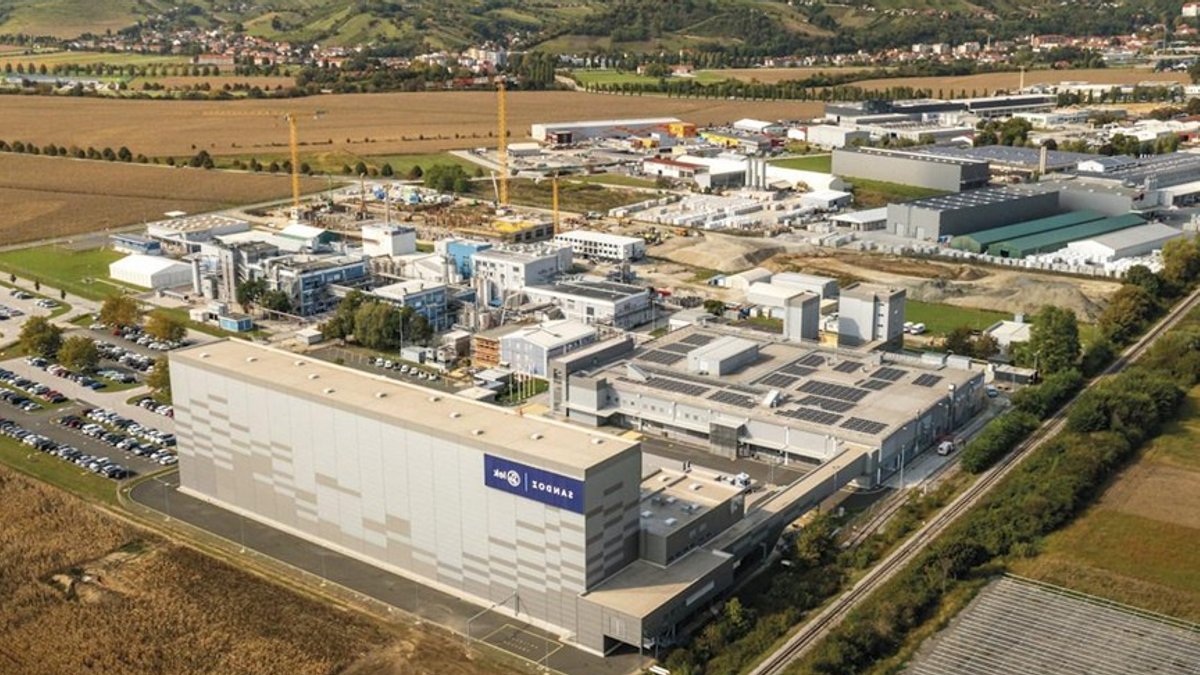
Sandoz, the generic and biosimilar drugmaker that separated from Novartis three years ago, has announced an ambitious target to double net sales by 2035. The push centers on biosimilars, which the firm calls its “golden decade.” Under the Bio100 initiative, it plans to introduce 100 biosimilars by 2040, compared to the 13 currently available. This expansion aligns with the expiration of blockbuster biologics patents, creating new market openings.
During its capital markets event in London, CEO Richard Saynor described the move as both a commercial and patient-access initiative. “Our Bio100 goals will make biosimilars the main driver of sales,” he stated. “This will improve patient access while delivering strong returns for investors.” The company’s pipeline already expanded last month after acquiring 10 biosimilar projects from Shanghai Henlius Biotech, increasing its total to 39 programs.
Alongside this, Sandoz continues developing over 300 generic drugs. Saynor highlighted the initiative’s scale, pointing to a robust biosimilar pipeline, flexible production capabilities, and efforts to retain skilled staff. The focus extends beyond volume to profitability. Sandoz aims to raise its profit margin from below 22% in 2024 to over 30% by 2035, supported by a disciplined approach to value creation.
The strategy depends on tracking patent expirations for biologics and small-molecule drugs, a trend the firm monitors closely. Between 2015 and 2025, patent expirations unlocked a market valued at roughly $200 billion. That figure rises to $270 billion in the following five years, with projections reaching $380 billion in the first half of the 2030s and $400 billion by 2040.
Read Also: Pig-to-human kidney transplant achieves a breakthrough
By then, Sandoz expects to have 70 biosimilars in circulation, including versions of Novo Nordisk’s semaglutide, the active compound in diabetes and obesity treatments like Wegovy and Ozempic. Market reaction was divided. Shares initially climbed before falling over 1% by the close, signaling some reservations about the plan’s feasibility. Still, Sandoz’s strategy reflects a broader industry trend: as biologics drive drug spending, biosimilars are becoming essential for cost control and market share.
The challenge is whether the company can meet its deadlines—or if the “golden decade” will face tougher competition than expected. The plan hinges on two key factors: the predictable expiration of biologics patents and the firm’s ability to scale production efficiently. The first is a well-documented trend in pharmaceuticals. The second carries more uncertainty. Biosimilars demand precise manufacturing, and any delays or quality concerns could damage credibility.
Rivals like Celltrion and Amgen are also expanding in this area, making dominance difficult. Yet Sandoz’s size—$11.1 billion in net sales last year—provides the resources to invest in research and manufacturing beyond what smaller competitors can offer. The emphasis on semaglutide is particularly significant. If Sandoz launches a biosimilar version before patent protections fully expire, it could capture a major share of the $20 billion+ annual revenue tied to Wegovy and Ozempic.
However, regulatory approvals and legal disputes with Novo Nordisk could slow progress. The firm’s success in managing these risks will shape whether its “golden decade” delivers, or becomes just another high-stakes gamble in pharma. For now, Sandoz is betting biosimilars will power its growth. Whether investors and patients share that confidence will become clear in the coming years. The next decade will determine if the strategy succeeds, or if the company’s ambitions outrun its ability to execute.

